




No More Walking on Eggshells: How to Set Boundaries with a Narcissistic Mother
If you have spent years walking on eggshells around your mother—monitoring her moods, anticipating her reactions, shrinking yourself to avoid conflict—you already know the weight of it. That particular kind of exhaustion is not dramatic or obvious. It accumulates quietly, in the constant low-level vigilance of never quite knowing which version of her you will encounter, in the way you edit your words before you speak them, in the creeping resentment that comes from endlessly prioritizing her emotional comfort over your own.
Narcissistic mothers are often deeply resistant to the idea of their children having needs, preferences, or limits that differ from their own. Setting a boundary—even a modest one—can trigger guilt-trips, emotional outbursts, accusations of disloyalty, or a cold withdrawal designed to remind you of the cost of asserting yourself. And so many daughters simply don't. They keep the peace by keeping themselves small. They mistake managing her emotions for love. They tell themselves that things are fine, even as they grow more depleted with each year that passes.
But boundaries are not cruelty. They are not rejection. They are the honest, necessary declaration of what you need in order to be in a relationship without losing yourself in the process. Setting boundaries with a narcissistic mother is one of the most difficult and most liberating things you can do—and this blog will walk you through exactly how to begin, what to expect, and how to hold the line even when every old instinct tells you to give in.

5 Steps to Reclaim Your Life
A practical guide to reclaiming your confidence, setting boundaries, and moving forward—without second-guessing yourself.
Why Setting Boundaries with a Narcissistic Mother Is Essential
Narcissistic mothers often relate to their children not as separate individuals but as extensions of themselves—sources of emotional supply, validation, and control. Because they lack the empathy to recognize where they end and you begin, your needs and feelings are rarely treated as equally valid. Instead, they are inconveniences to be managed, or worse, threats to be neutralized. Over time, living inside that dynamic teaches you to abandon your own needs before anyone else can dismiss them—a pattern that follows you well beyond your mother's reach.
Setting boundaries is not about punishing her or ending the relationship. It is about changing the terms on which the relationship operates so that participating in it no longer requires you to disappear. It is about establishing, sometimes for the very first time, that you are a separate person with legitimate needs—and that those needs deserve to be honored, by her and by you.
The Guilt of Setting Boundaries
Guilt is almost universal among daughters of narcissistic mothers who begin to set boundaries, and it is not accidental. Narcissistic parents are exceptionally skilled at cultivating it—through sighs, silences, tears, accusations, or the careful deployment of phrases like "after everything I've done for you." This guilt was not a natural response you developed on your own. It was installed, deliberately or not, as a mechanism to keep you compliant. Recognizing that does not make the guilt disappear, but it does change what it means. It is not a sign that you have done something wrong. It is a sign that the boundary is working.
One of the most important reframes available to you as you begin this process is this: your mother's emotional reactions to your boundaries are her responsibility, not yours. Her disappointment, her anger, her hurt—these are responses you can witness with compassion without being obligated to fix. You did not cause her distress by having a need. You caused it by refusing, perhaps for the first time, to erase yourself in order to prevent it.
Practical steps to manage the guilt:
Name the guilt for what it is: a conditioned response, not a moral verdict. When it arises, try saying to yourself: "This guilt is familiar. It does not mean I've done something wrong."
Write down your reasons for the boundary before any difficult conversation. Having your reasoning in your own words, on paper, gives you something to return to when guilt tries to rewrite the story.
Start with smaller, lower-stakes boundaries to build confidence before tackling the most charged areas of the relationship.

How to Set Boundaries with a Narcissistic Mother
Setting boundaries with a narcissistic mother is rarely a single conversation that resolves everything. It is a practice—one that requires clarity about what you need, consistency in how you communicate it, and the emotional stamina to hold the line when she pushes back. And she almost certainly will push back. Narcissistic individuals rely on the absence of limits to maintain their sense of control, and when those limits are introduced, the first response is almost always to test whether they are real. Your job is to demonstrate, calmly and repeatedly, that they are.
The most effective boundaries are specific, stated simply, and followed through consistently. Vague limits are easy to argue around. Boundaries that are stated once and then abandoned under pressure teach her that pressing harder is the path to getting what she wants. The goal is not to have a perfect conversation—it is to change the pattern, one interaction at a time.
The Grey Rock Method
The Grey Rock Method is a practical strategy developed specifically for interactions with narcissistic or highly manipulative individuals. The core principle is straightforward: make yourself as uninteresting as a grey rock. By responding to provocations, guilt-trips, and emotional bids with calm, neutral, non-reactive replies, you remove the emotional charge that narcissistic behavior is designed to generate. Without that charge—without the tears, the arguments, the visible distress she is accustomed to producing—the manipulation loses much of its power.
This is not about being cold or unkind. It is about strategic emotional neutrality in situations where emotional engagement feeds the cycle. You are not suppressing your feelings internally—you are simply choosing not to perform them in a context where they will be weaponized against you.
Practical steps for using the Grey Rock Method:
Keep responses brief, factual, and calm. "Mm" and "I see" and "I'll think about that" are complete responses. You are not required to explain, defend, or elaborate.
Do not share personal vulnerabilities, struggles, or emotional material that she has historically used against you. Protect your inner world during interactions where it will not be safe.
When she attempts to escalate—through guilt, criticism, or dramatic reaction—respond as neutrally as possible and, if needed, exit the conversation: "I need to go now. We can talk another time."
No Contact or Limited Contact
For some survivors, the most honest assessment of the relationship is that no amount of boundary-setting makes it safe or sustainable. If every interaction leaves you destabilized, if the manipulation is severe or the abuse is ongoing, if contact consistently undoes the healing work you are trying to build—then reducing or ending contact is not a failure. It is a form of self-preservation, and it is a legitimate choice.
No contact is not a punishment inflicted on her. It is a boundary you are setting for yourself—a recognition that your healing and wellbeing require space from a relationship that is actively harmful. It is one of the hardest decisions many survivors ever make, and it is often accompanied by grief, guilt, and the complicated love that persists even in the most painful relationships. All of that is real, and all of it can be held alongside the decision itself.
Practical steps for evaluating and implementing reduced contact:
Honestly assess the relationship's impact: does contact leave you feeling better or worse? Does it support your healing or consistently set it back? Let your body's response to the question be part of the answer.
If reducing contact, do so in whatever increments feel manageable—fewer calls, shorter visits, communication only in writing. You do not have to make a dramatic announcement; you can simply make yourself less available.
Prepare emotionally for her response. A narcissistic mother is unlikely to receive reduced contact with grace. Her reaction—however intense—is not evidence that you have made the wrong decision.

Maintaining Your Boundaries Over Time
Setting a boundary is the beginning, not the end. Narcissistic mothers rarely accept limits the first time they are stated—or the second, or the fifth. They will probe for inconsistency, wait for moments of vulnerability, and return repeatedly to the same pressure points in search of a crack. This is not a reason to abandon your boundaries. It is a reason to understand that maintaining them is a long-term practice rather than a single act of courage.
Consistency is the currency of a real boundary. Every time you hold the line—especially when it is difficult, especially when the guilt is loud, especially when her reaction is more intense than you anticipated—you demonstrate to both her and yourself that the boundary is genuine. Over time, consistent enforcement changes the dynamic. Not because she becomes a different person, but because the old patterns simply stop working as reliably as they once did.
Practice Self-Compassion Throughout
Setting and maintaining boundaries with a narcissistic mother is emotionally demanding work. There will be moments when you give in, when the guilt becomes too heavy, when you pick up the phone when you said you wouldn't or soften a boundary because her distress was too uncomfortable to witness. These moments are not failures. They are part of the process. What matters is not perfection but direction—the overall trajectory of becoming someone who protects her own peace, even when it is hard.
Be as compassionate with yourself in this process as you are learning to be about the original wounds. You are changing patterns that were established over decades, in a relationship with enormous emotional weight. That takes time, and it deserves patience—especially from you.
Practical steps for maintaining boundaries with self-compassion:
After difficult interactions, give yourself intentional recovery time. A short walk, a grounding practice, a call to someone supportive—something that helps your nervous system settle before you process what happened.
When you slip on a boundary, resist the urge to turn it into evidence of failure. Instead, treat it as information: what made that particular boundary difficult to hold, and what would help you hold it better next time?
Build a support network—therapy, trusted friends, survivor communities—that can hold you accountable and affirm you on the days when the work feels impossible.
Key Takeaways
Boundaries with a narcissistic mother are not cruelty—they are the honest, necessary expression of your right to exist as a separate person with legitimate needs.
The guilt that accompanies boundary-setting is a conditioned response, not a moral verdict. Feeling it does not mean the boundary is wrong.
The Grey Rock Method is a practical tool for minimizing emotional manipulation during unavoidable interactions.
Reducing or ending contact is a legitimate and sometimes necessary form of self-protection—not a failure or a punishment.
Maintaining boundaries is a long-term practice. Consistency, self-compassion, and support are what make it sustainable.

Frequently Asked Questions
This is one of the most common and painful realities of setting boundaries with a narcissistic parent: she may never willingly respect them. Narcissistic individuals tend to experience boundaries as threats rather than reasonable requests, and their response is often to escalate, manipulate, or simply ignore the limit entirely. This does not mean boundaries are pointless. It means the purpose of the boundary shifts: you are no longer setting it in hopes of changing her behavior. You are setting it to change your own—to stop participating in dynamics that harm you, to protect your emotional energy, and to practice treating yourself as someone whose limits deserve to be honored, regardless of her response.
This is sometimes called "flying monkeys"—family members who, intentionally or not, carry the narcissistic mother's perspective and pressure you on her behalf. It is an extremely isolating experience, and it can make you feel like the problem in a situation where you are actually trying to protect yourself. The most important thing to remember is that you are not obligated to justify your boundaries to people who have a vested interest in the family dynamic remaining unchanged. You can be respectful and brief: "This is a decision I've made for my own wellbeing, and I'm not looking to debate it." Then hold that line. Their discomfort with your boundary is not a reason to abandon it.
The Grey Rock Method is generally considered a safe and effective strategy for reducing the impact of narcissistic manipulation in interactions that cannot be avoided. In most cases, providing less emotional reaction reduces the narcissist's motivation to escalate, because the behavior is no longer producing the desired result. However, it is worth noting that in some situations—particularly where there is a history of more severe or volatile behavior—any boundary-setting can temporarily increase reactivity before it decreases it. If you are in a situation where your physical or emotional safety is at genuine risk, please prioritize your safety above any particular strategy, and consider seeking support from a therapist or domestic abuse resource before making changes.
No contact is rarely an easy or impulsive decision—for most survivors it comes after years of trying other approaches. Some questions worth sitting with: Does maintaining contact require you to continuously compromise your mental health, your sense of reality, or your healing progress? Do you feel consistently worse after interactions with her, in ways that take significant time to recover from? Have you tried setting limits repeatedly, only to have them violated or weaponized against you? Is the relationship characterized more by harm than by anything nourishing? There is no universal right answer, and many survivors find value in working through this decision with a therapist who specializes in narcissistic abuse before acting on it. What matters most is that the decision is made in service of your wellbeing, not out of impulsive anger—and that whatever you choose, you give yourself full permission to make it.
First: feel it. Guilt is real and trying to suppress or argue yourself out of it immediately rarely works. Acknowledge it is there, and then remind yourself of what you know intellectually even when you don't feel it emotionally: that having limits is not wrong, that her discomfort with your boundary is not proof that you caused harm, and that guilt in this context is a conditioned response rather than a reliable moral compass. It can help to have a short, written reminder of why the boundary matters—something you can return to when the guilt is loud. It also helps to talk to someone who understands the dynamic, whether a therapist, a trusted friend, or a support community. You should not have to carry the weight of this guilt alone.
In some cases, yes—though it requires realistic expectations. A relationship with a narcissistic mother, even with clear and consistently held boundaries, is unlikely to look like the warm, mutually supportive mother-daughter relationship you might have wished for. What boundaries can do is change the terms: they can reduce the frequency and severity of harmful interactions, protect your emotional energy, and allow you to engage with her in a more limited way without it costing you as much. Whether that constitutes a "healthy" relationship depends on your definition and your own assessment of what the relationship provides versus what it costs. For some daughters, limited contact with firm boundaries creates a bearable and even occasionally meaningful connection. For others, the honest answer is that the relationship cannot be made healthy—only managed.
👉 Diane’s upcoming course A Girlfriends' Guide to the Other Side dives deeper into practical boundary-setting strategies and offers exercises to help you strengthen this vital skill.
You Are Allowed to Take Up Space—Starting Now
Setting boundaries with a narcissistic mother is not the end of the relationship—it is the beginning of a new one. One in which you are no longer invisible, no longer required to edit yourself into acceptability, no longer walking on eggshells to protect someone else's comfort at the expense of your own. It is the first concrete act of telling yourself—and her—that you are a person whose needs are real and whose peace is worth protecting.
It will not be easy. There will be guilt, and pushback, and moments when you wonder if it would be simpler to go back to the way things were. But you already know the cost of the way things were. You have been paying it for years. What boundaries offer you is something different: the chance to be in your own life, fully, without shrinking. You deserve that. Start today—one boundary, one conversation, one choice to protect your peace. It is enough to begin.
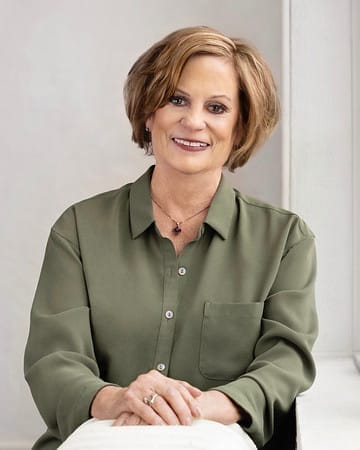
Hi, I’m Diane – and I’m so glad you’re here
Diane is the author of A Girlfriend’s Guide to the Other Side: Reclaim Your Mind, Body, and Soul After Narcissistic Abuse, Divorce, or Relational Trauma.
After surviving the wreckage of a controlling relationship that stripped her identity, she turned her pain into purpose. Through her book, course, and community, Diane now guides women on the journey of rebuilding self-worth, setting healthy boundaries, and reclaiming their lives.
Her mission is simple: to remind every woman that healing is possible, and that your future can be brighter than your past.
Categories
Rise Weekly Newsletter
Because healing isn’t just about surviving, it’s about rising. Rise Weekly delivers empowering insights, gentle reminders, and soulful tools to help you reclaim your strength, set powerful boundaries, and rebuild a life that feels like you. If you're ready to rise above trauma and step into your next chapter with clarity and courage - this is your space.
Created by © Suzanne Startari with systeme.io